

Aloe Vera for Eczema- and Psoriasis-Prone Skin: A Gentle Comfort Guide
If you live with eczema or psoriasis, you've probably been told to “try aloe” by at least one well-meaning person. It's not bad advice — but it's incomplete. Aloe vera is a genuinely useful comfort ingredient for reactive, inflamed skin. It is not a treatment. This guide explains where it fits, so you can use it alongside your dermatologist's plan rather than instead of it.
What these conditions have in common
Eczema (atopic dermatitis) and psoriasis are different conditions with different causes, but they share three day-to-day realities: a weakened skin barrier, inflammation, and dryness that feeds the itch–scratch cycle. Anything that calms the skin and helps it hold water makes flares more bearable and, for many people, less frequent. That is the job aloe can do.
What aloe vera can help with
- Itch and heat. Aloe is naturally cooling, and compounds such as acemannan and salicylates help quiet the low-grade inflammation that drives itching.
- Dryness. Aloe's polysaccharides pull water into the surface layers. Paired with butters and oils, that hydration stays put — which matters, because dry skin cracks and cracked skin flares.
- Barrier support. Small studies suggest aloe helps skin recover its barrier function after irritation. It won't rebuild a genetically weak barrier, but it gives it an easier time.
What aloe vera won't do
Aloe does not address the immune activity underneath eczema or psoriasis. It will not clear plaques or replace prescribed steroids, calcineurin inhibitors, biologics or light therapy. Please keep taking the advice of your dermatologist; think of aloe as the between-flares comfort layer that keeps skin calm and supple.
Choosing aloe products that won't make things worse
Reactive skin reacts to formulas, not just to ingredients. Look for:
- Few ingredients, no harsh surfactants. Sulfate-free washes, no bar soap.
- Low or no fragrance. Essential oils can be triggers. If you like scent, patch-test on the inner forearm for three days first.
- Aloe plus occlusives in one step. A lotion or cream, not a bare gel — gel alone can dry skin out as it evaporates (we explain why in our dry-skin guide).
- Nothing “tingly.” Tingling on compromised skin is irritation, not activity.
How we'd build a gentle routine
Cleanse with lukewarm water and a mild aloe wash — Original Body Wash is our lowest-scent option. Keep showers under ten minutes.
Moisturize within a minute of stepping out, onto damp skin, with Original Body Lotion (aloe, plant butters, minimal scent). Many customers with reactive skin also like Eucalyptus & Sage for its cooling feel, but patch-test first.
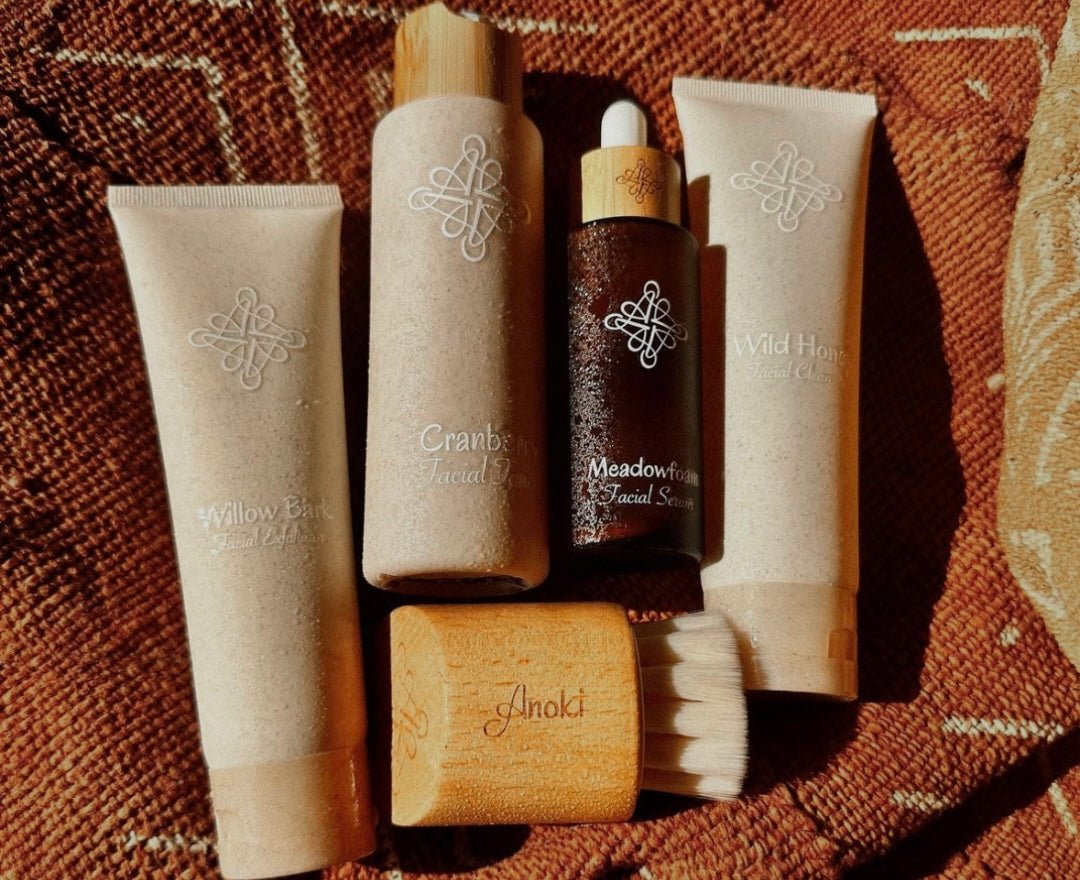
Face: Wild Honey Facial Cleanser, then Hózhó Restorative Cream — centella, peptides and aloe are all barrier-friendly, and it's fragrance-light. Skip acids and exfoliants during a flare.
Sun: mineral filters (zinc oxide) are far better tolerated than chemical ones. Our Aloe Vera Mineral Sunscreen SPF 50 uses non-nano zinc in an aloe base.
Frequently asked questions
Can aloe vera cure eczema or psoriasis?
No. Nothing topical over the counter cures either. Aloe can make skin more comfortable between and during mild flares.
Is it safe to use aloe on broken or weeping skin?
Ask your dermatologist. Open skin absorbs more of everything, including preservatives and fragrance. Wait until the surface has closed.
Is aloe vera safe for babies and children with eczema?
Aloe itself is generally well tolerated, but check the full ingredient list for fragrance and essential oils, patch-test, and confirm with your pediatrician.
Which Anoki products are lowest-irritation?
Original Body Wash and Original Body Lotion, Wild Honey Facial Cleanser, Hózhó Restorative Cream and the Aloe Vera Mineral Sunscreen. Everything we make is cruelty-free; note that some products contain honey or beeswax.
For more on why aloe anchors every formula we make, read Aloe Vera Skincare Benefits: Why We Put It in Every Formula.
This article is for education, not medical advice. If you have a diagnosed skin condition or a spot that is changing shape, size or color, please see a dermatologist.
Go back to nature and heal with the land.
— Anoki


Leave a comment
This site is protected by hCaptcha and the hCaptcha Privacy Policy and Terms of Service apply.