
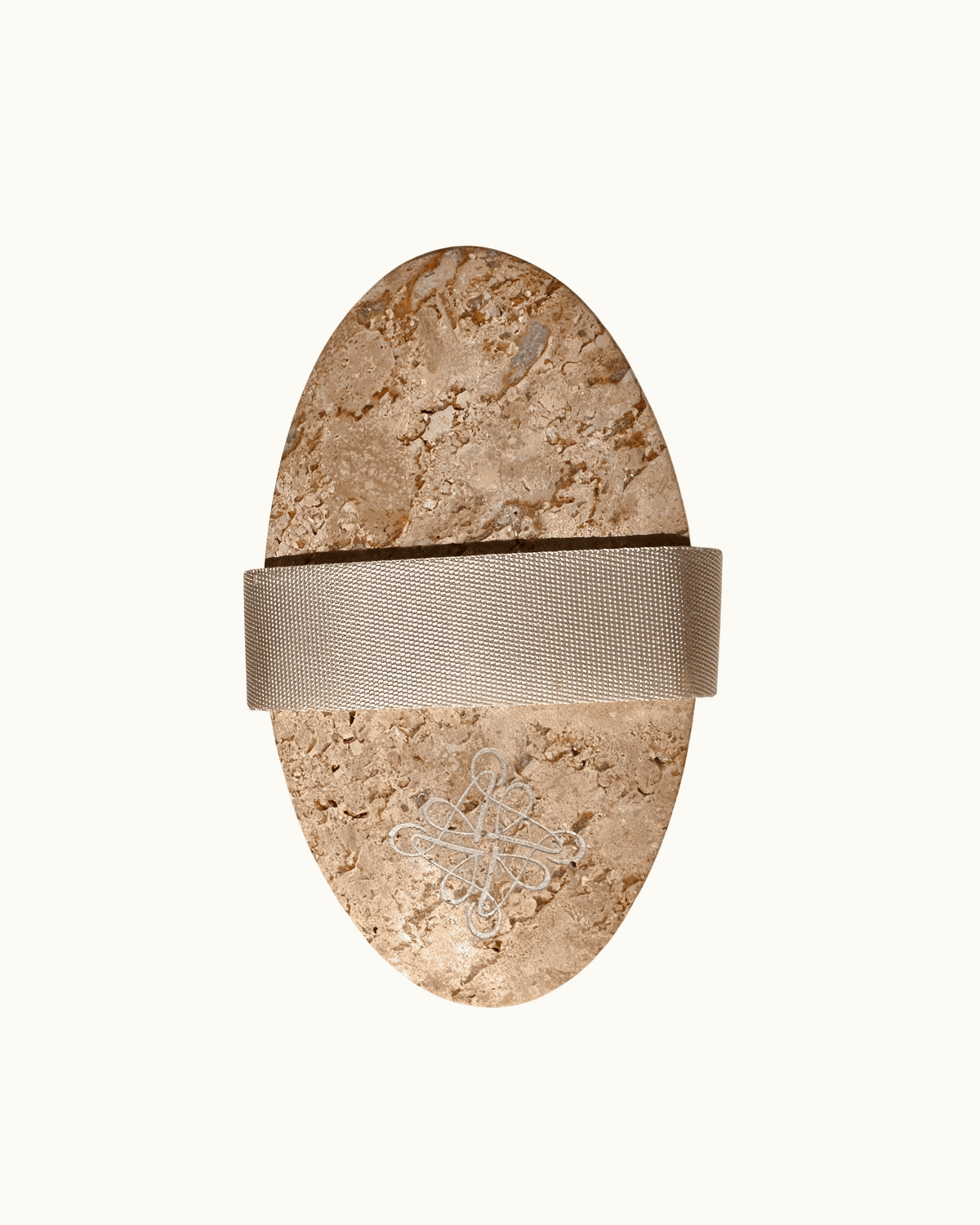
Dry Brushing With a Travertine Stone Brush: A 5-Minute Morning Ritual
Dry brushing takes five minutes, needs no water, and does something most skincare routines skip entirely: it works on the skin you're about to moisturize, not just the moisturizer itself. A natural-bristle brush set in a Travertine Body Brush handle sweeps away dead surface cells, wakes up circulation, and preps skin to actually absorb what you put on it next. Here's how to do it properly, and why five unhurried minutes each morning make a real difference.
What dry brushing actually does
Your skin sheds cells constantly, but they don't always let go on their own — they build up as roughness, dullness, and the slightly ashy look dry skin gets in cooler months. Dry brushing is simple mechanical exfoliation: firm, natural bristles lift that top layer of dead cells before you shower. Two things follow. First, skin looks and feels smoother almost immediately. Second, circulation in the area picks up, which is why so many people describe dry brushing as energizing rather than relaxing.
It is not a substitute for hydration — it's the step that makes hydration work harder. Buffed, smooth skin absorbs a body lotion far more evenly than skin still carrying a layer of dead cells.
Why travertine and natural bristle, specifically
A good dry brush needs a stiff enough bristle to move dead skin without tearing at live skin underneath, and a handle that won't slip once your palm is dry and a little dusty. Travertine stone is naturally cool, heavy enough to hold steady, and — being a natural material — it ages well instead of cracking the way some plastic handles do after a few months of daily use. It's also simply pleasant to hold, which matters if you want a five-minute habit to actually stick.
How to dry brush: technique and direction
- Start dry, before you shower. Skin and brush should both be completely dry — this is a "dry" brush for a reason. Water bends and softens bristles so they exfoliate less.
- Always brush toward your heart. Begin at your feet and work up your legs; begin at your hands and work up your arms. Long, light-to-firm strokes, not scrubbing back and forth. This direction supports your lymphatic system, which drains toward the center of your body.
- Use light pressure. Enough to feel it, not enough to redden the skin. If you see irritation, ease off — you're pressing too hard or brushing the same spot too many times.
- Cover legs, arms, and torso in about three to five minutes. Skip anywhere with broken skin, a rash, sunburn, or active irritation, and go gently over thinner skin like the chest.
- Shower right after. Rinse away the skin you just lifted, then pat — don't rub — dry.
- Moisturize immediately, on damp skin. This is the step that actually delivers the payoff. Freshly brushed, damp skin takes in a body lotion faster and holds it longer than skin that's been left to air-dry first.
Building it into a morning ritual
Dry brushing rewards consistency over intensity. Two to three mornings a week is enough to notice smoother skin; brushing daily is fine as long as you keep the pressure light. Because it takes only a few minutes and needs nothing but the brush itself, it's an easy step to add before a shower you're already taking — the habit that's hardest to keep is usually the one with the most steps, and this one has three: brush, shower, moisturize.
Finish with a lotion built the same way we build everything at Anoki: aloe vera for water, plant butters to seal it in. Sweetgrass Body Lotion is a warm, grounding scent that pairs naturally with a morning ritual, though any of our body washes and lotions will do — the brushing is what does the real work. If your skin runs dry or reactive, we go deeper on the hydration side of this routine in how aloe vera helps soothe dry skin.
If you also enjoy a slower wind-down ritual in the evening, a Travertine Wax Melt + Oil Burner is a nice bookend to a brisk morning brush — same natural material, opposite mood. And if you're curious why we lean on aloe across nearly every formula you'll pair with brushing, we explain it in why aloe vera is in every Anoki formula.
Frequently asked questions
How often should I dry brush?
Two to three times a week is a good starting cadence. If your skin tolerates it well and doesn't turn red or feel raw, daily is fine — just keep the pressure light.
Should I dry brush before or after showering?
Always before. Dry brushing needs dry skin and a dry brush to work; shower immediately after to rinse away the skin cells you've lifted.
Can dry brushing help with cellulite?
Dry brushing can temporarily smooth the look of skin by boosting surface circulation, but there's no solid evidence it changes cellulite itself. Think of it as a texture and glow habit, not a body-reshaping one.
Is dry brushing safe for sensitive skin?
It can be, with a lighter touch and less frequency — every other day or twice a week rather than daily. Skip it entirely over eczema, active breakouts, sunburn, or any broken skin.
This article is for education, not medical advice. If you have a diagnosed skin condition, please check with a dermatologist before starting any new skin ritual.
Go back to nature and heal with the land.
— Anoki


Leave a comment
This site is protected by hCaptcha and the hCaptcha Privacy Policy and Terms of Service apply.