
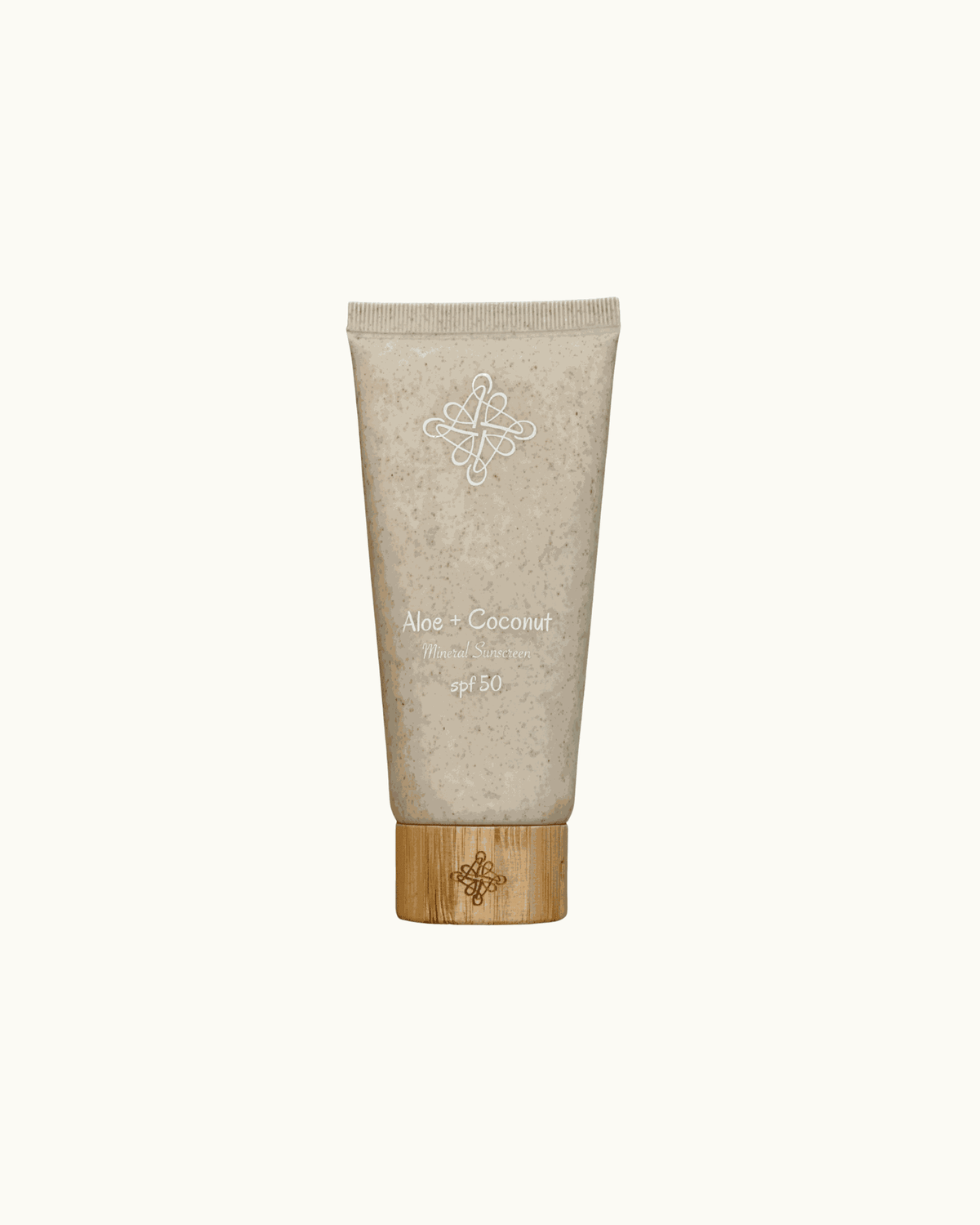
Does Mineral Sunscreen Actually Work? Zinc Oxide, SPF and Aloe, Explained
Short answer: yes — mineral sunscreen works, and it works the same way for everyone. Non-nano zinc oxide sits on top of skin and physically reflects and scatters UV rays before they penetrate. It doesn't need to absorb into skin or "activate" the way chemical filters do, which is why it's reliable from the first application. Here's how it actually functions, what SPF 50 really means, and why we build ours with aloe.
How mineral sunscreen physically blocks UV
Zinc oxide is a mineral compound that forms a thin barrier on the skin's surface. UV rays hit that barrier and are reflected or scattered away, similar to how a mirror bounces light. This is different from chemical filters (avobenzone, octinoxate and others), which absorb UV radiation and convert it to heat inside the skin. Mineral filters work immediately on application — no 20-minute wait — and they don't break down as quickly in direct sun.
Non-nano matters here: it means the zinc oxide particles are large enough that they don't absorb into skin or wash into coral reefs and disrupt marine life, which is why reef-safe formulas specify it. Our Aloe Vera Mineral Sunscreen SPF 50 uses non-nano zinc oxide for exactly this reason.
What "SPF 50" actually means
SPF measures protection against UVB rays, the ones responsible for sunburn. SPF 50 blocks about 98% of UVB rays when applied correctly — at roughly a quarter-teaspoon for the face, reapplied every two hours in direct sun and after swimming or sweating. No sunscreen blocks 100%, and no SPF number holds up if you apply too little or skip reapplication. Broad-spectrum labeling (which ours carries) confirms the formula also covers UVA rays, the ones linked to premature aging and deeper skin damage.
Why mineral sunscreens sometimes get a bad reputation — and how we fixed it
The common complaint about mineral sunscreen is the white cast, especially on deeper skin tones, because early formulas used a heavy, unblended zinc paste. Modern micronized (but still non-nano) zinc oxide, blended into a lighter base, largely solves this. We cover the tone-specific side of this in detail in our guide to mineral vs. chemical sunscreen for dark skin tones — this article focuses on the mechanism itself.
Why we add aloe vera to a sunscreen
Aloe doesn't change how zinc oxide blocks UV — that's a physical, not a botanical, mechanism. What aloe does is support the skin around it. Its polysaccharides hold water at the surface, so the sunscreen feels hydrating rather than chalky or drying, and its calming compounds help skin that's already a little sun-warmed feel more comfortable. Coconut in the same formula softens the finish further, which is part of why it goes on without the thick, pasty feel people expect from mineral SPF. We go deeper on aloe's role across our line in why we put aloe vera in every formula.
How to actually get SPF 50 protection from the bottle
- Apply enough. A thin layer under-delivers the labeled SPF — use a quarter-teaspoon for the face and neck.
- Apply it last. After serum and moisturizer, before makeup, as the final skincare step each morning.
- Reapply every two hours outdoors, and immediately after swimming, sweating, or towel-drying.
- Don't skip cloudy days. Up to 80% of UV rays pass through cloud cover.
- Pair it with hydration. If skin runs dry, a properly layered aloe routine helps mineral sunscreen sit more evenly instead of settling into dry patches.
Frequently asked questions
Is mineral sunscreen actually as effective as chemical sunscreen?
Yes, when the SPF and application are equal. Both filter types are FDA-recognized for UV protection; mineral filters have the added benefit of working on contact rather than needing to absorb first.
Does mineral sunscreen leave a white cast?
Older, unblended formulas often did. Our formula is micronized and blended with aloe and coconut specifically to minimize that — see our full breakdown for deeper skin tones for more.
Is reef-safe sunscreen actually better for the ocean?
Non-nano zinc oxide avoids the smaller nanoparticle and chemical-filter runoff (oxybenzone, octinoxate) that's been linked to coral bleaching in reef studies. It's a meaningful choice if you swim or vacation near reef systems.
Do I still need sunscreen on days I stay inside?
If you're near windows or use screens most of the day, UVA still reaches skin through glass. A daily layer is worth keeping in the routine even on low-sun days.
Ready to build the rest of your morning ritual? Pair sunscreen with Anú Radiance Serum for tone, or start your evening ritual with the Natural Jade Stone Eye Mask.
This article is for education, not medical advice. If you have a skin condition, are prone to sunburn, or have questions about sun sensitivity, please check with a dermatologist.
Go back to nature and heal with the land.
— Anoki


Leave a comment
This site is protected by hCaptcha and the hCaptcha Privacy Policy and Terms of Service apply.